



















































Beyond the Belt: What Drives Reliable Fan Performance
Power transmission is a critical part of fan system design. While several methods are available to transfer power from a motor to a fan, V-belt drives remain one of the most widely used solutions for industrial air moving equipment.
Belt drives provide an economical means of transmitting power while also offering a simple method for modifying system performance. They require no lubrication and maintenance is relatively basic and infrequent. In addition, they help dampen sudden shock loads and changes in loading conditions while sheaves experience relatively little wear over long periods of operation.
Like any mechanical system, however, belt drives offer both advantages and limitations. Understanding how they work and the factors that influence their performance is an important part of selecting and maintaining a reliable fan system.
V-Belt Drive Basics
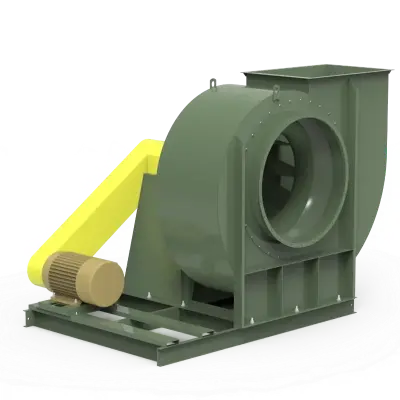
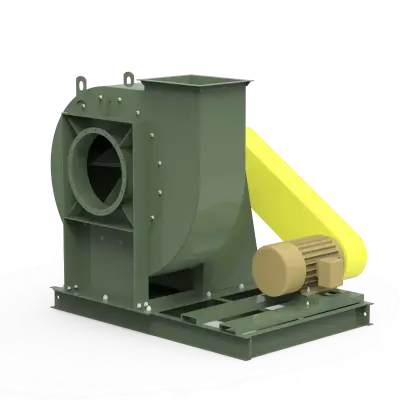
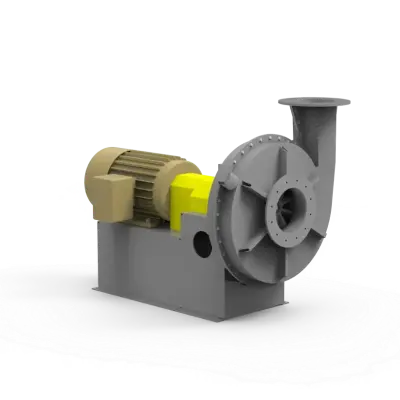
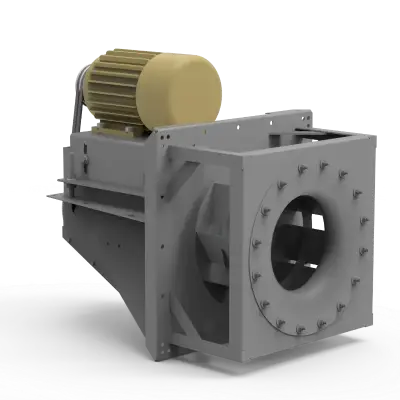
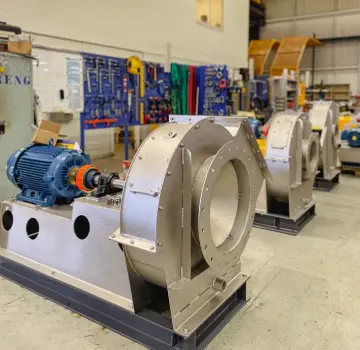
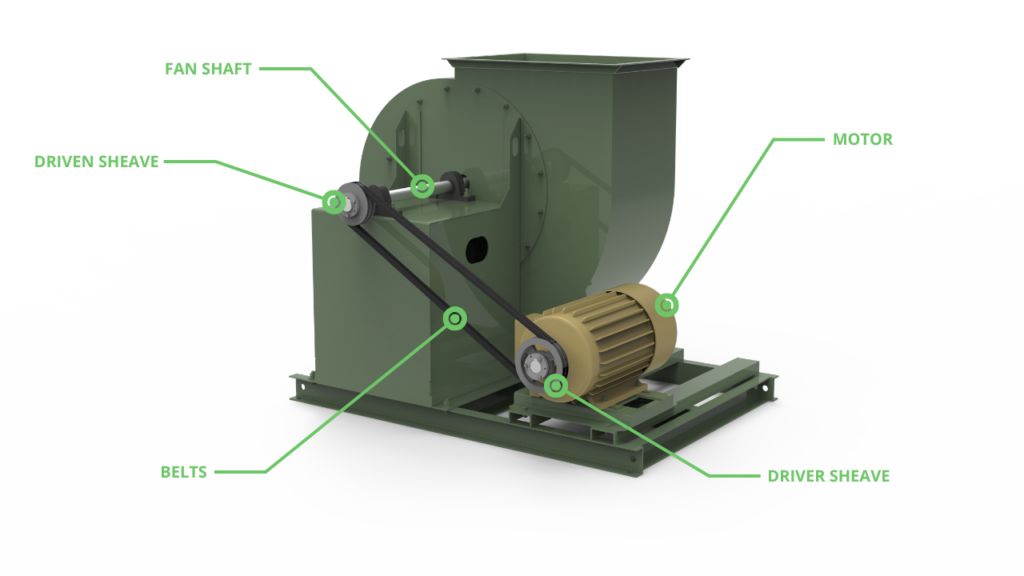
Industrial fans utilize a motor (power source), fan shaft, driver sheave, driven sheave, and a belt or belts.
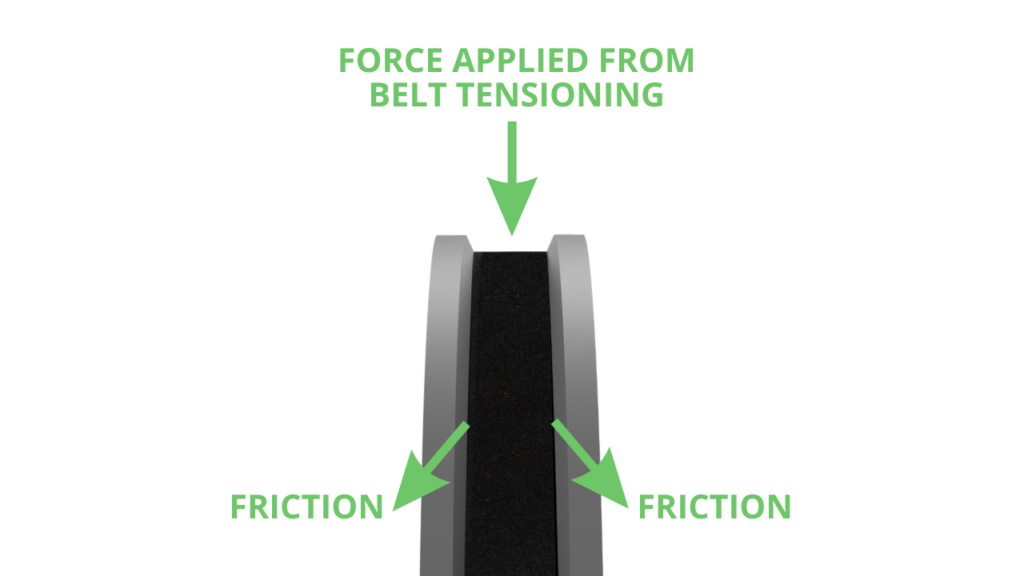
A v-belt drive uses the wedge principle and applies force through belt tensioning, causing friction which results in the belt being properly positioned in the grooves of the sheave.
Drive ratio is the difference in pulley or datum sheave diameters and determines whether the fan will increase or decrease in speed.
Drive Ratio = (Fan) Driven Sheave / (Motor) Driver Sheave
If a drive ratio is greater than 1, the fan will decrease in speed. If the drive ratio is less than 1, the fan will increase in speed.
Drive Ratio = 12.0” Driven Diameter / 8.0” Driver Diameter = 1.5
1800 RPM Motor / 1.5 Drive Ratio = 1200 RPM Fan Speed
A 1:1 drive ratio can also create a beat frequency between rotating components. If this occurs, consider adjusting the driven speed to about ±5% of the driver speed.
Design Considerations That Influence Performance
There are several important design considerations that influence selection including drive type, belt materials, belt and sheave construction, power transmission requirements, operating speeds, sheave diameters, and center distances. Regardless of the specific design, a fundamental objective is maintaining sufficient friction between the belt and the sheave contact surface. Without enough friction, slippage can occur and drive performance can be affected.
Understanding the Limitations: Belt Creep and Slip
Speed losses in belt drives occur because of belt creep and belt slip. Creep occurs in all belts except synchronous designs and is caused by the difference in tension between the tight and slack sides of the drive. Because the belt elongates under tension, the driven shaft rotates at a slightly slower speed than it would without creep. In well-designed V-belt drives, creep is generally around 0.5 percent. Slippage refers to any movement greater than this normal creep condition and can occur when belt tension is not properly established and periodically checked. As belts wear, tension is reduced over time, making occasional re-tensioning necessary. Service conditions such as extreme temperatures, high moisture levels, oily environments, and chemically contaminated atmospheres can also damage belts or contribute to severe slippage.
Selecting the Right Belt Design
Several belt types are available for different operating requirements including classical V, narrow V, flat, notched V, joined V, V ribbed, and synchronous designs.
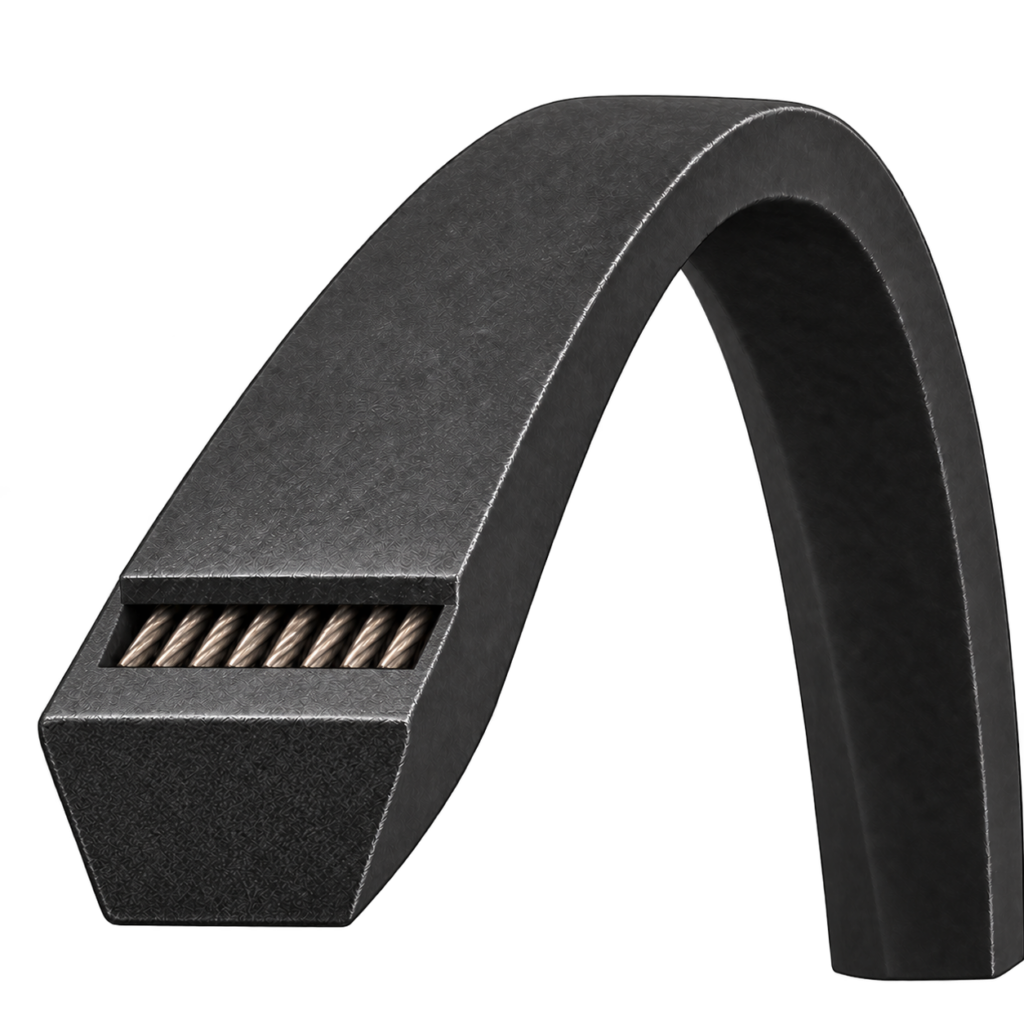
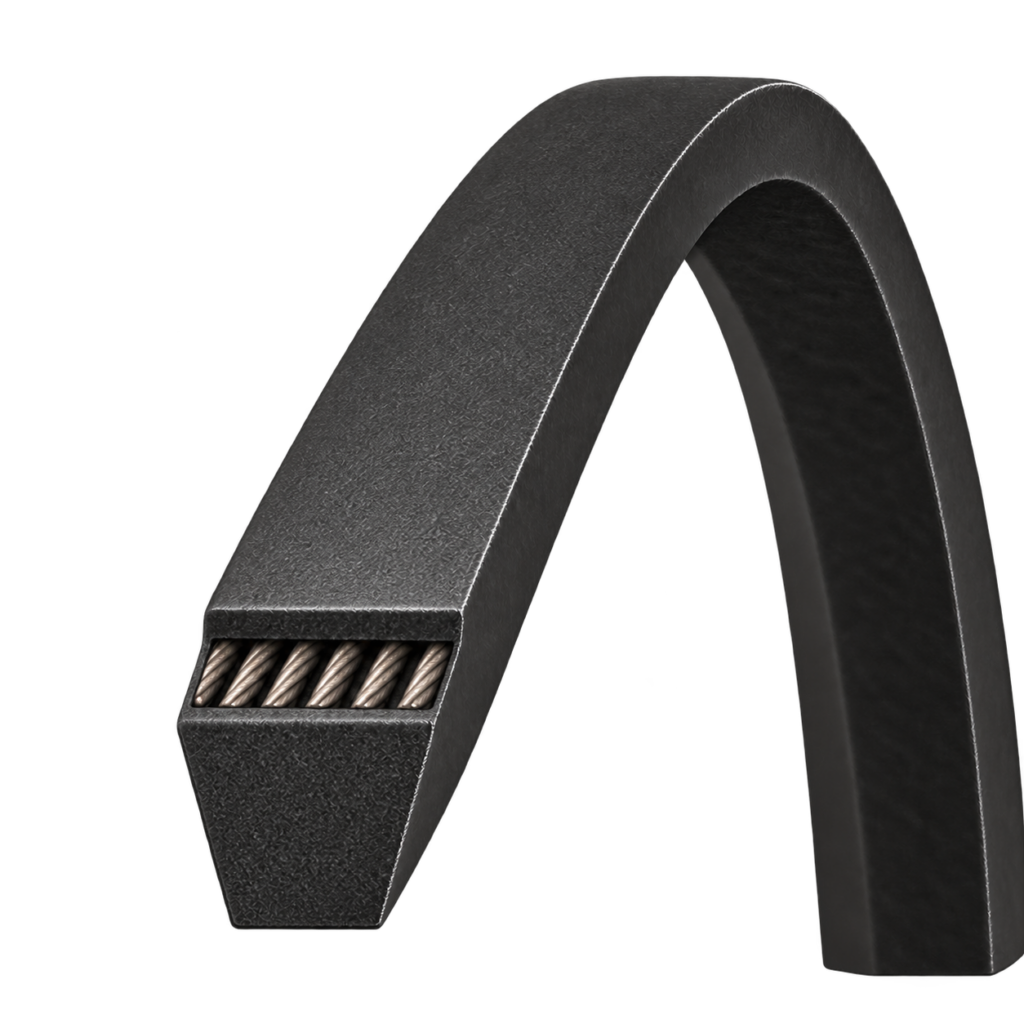
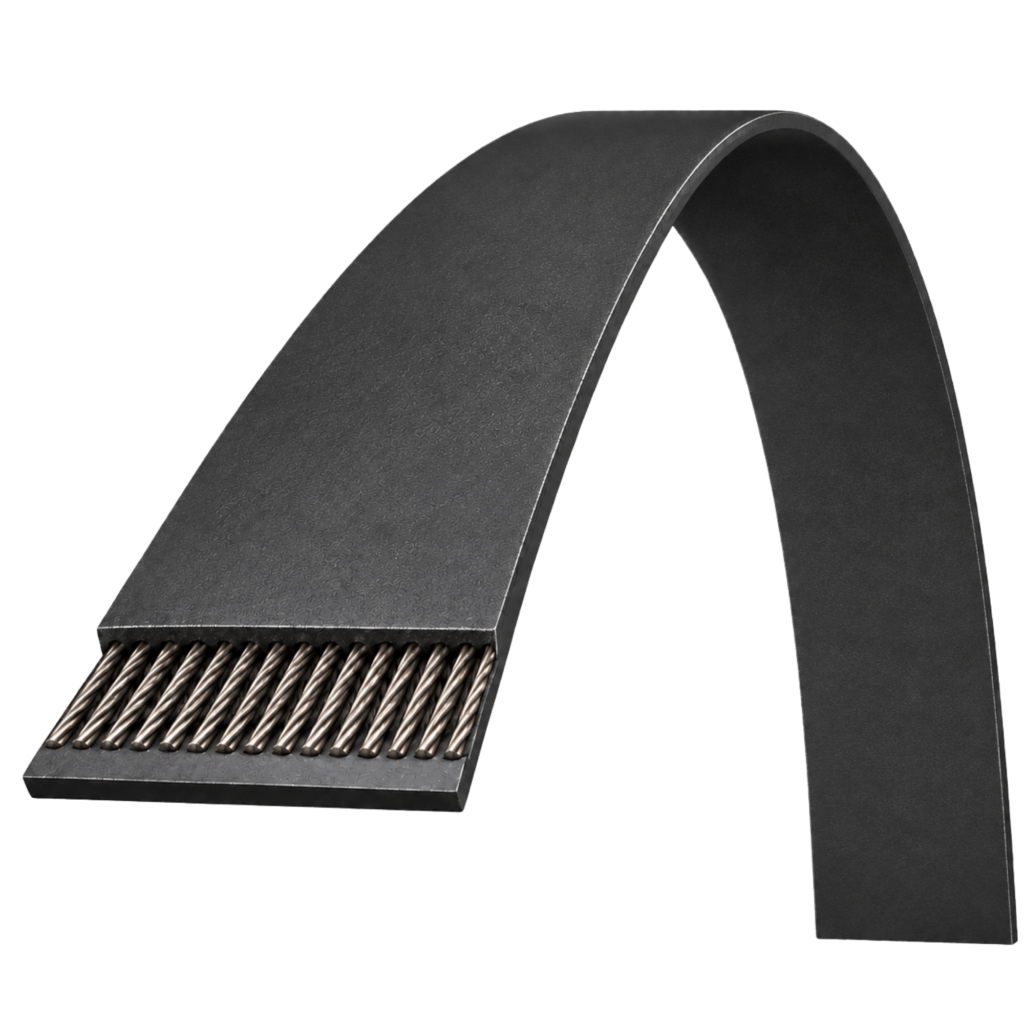
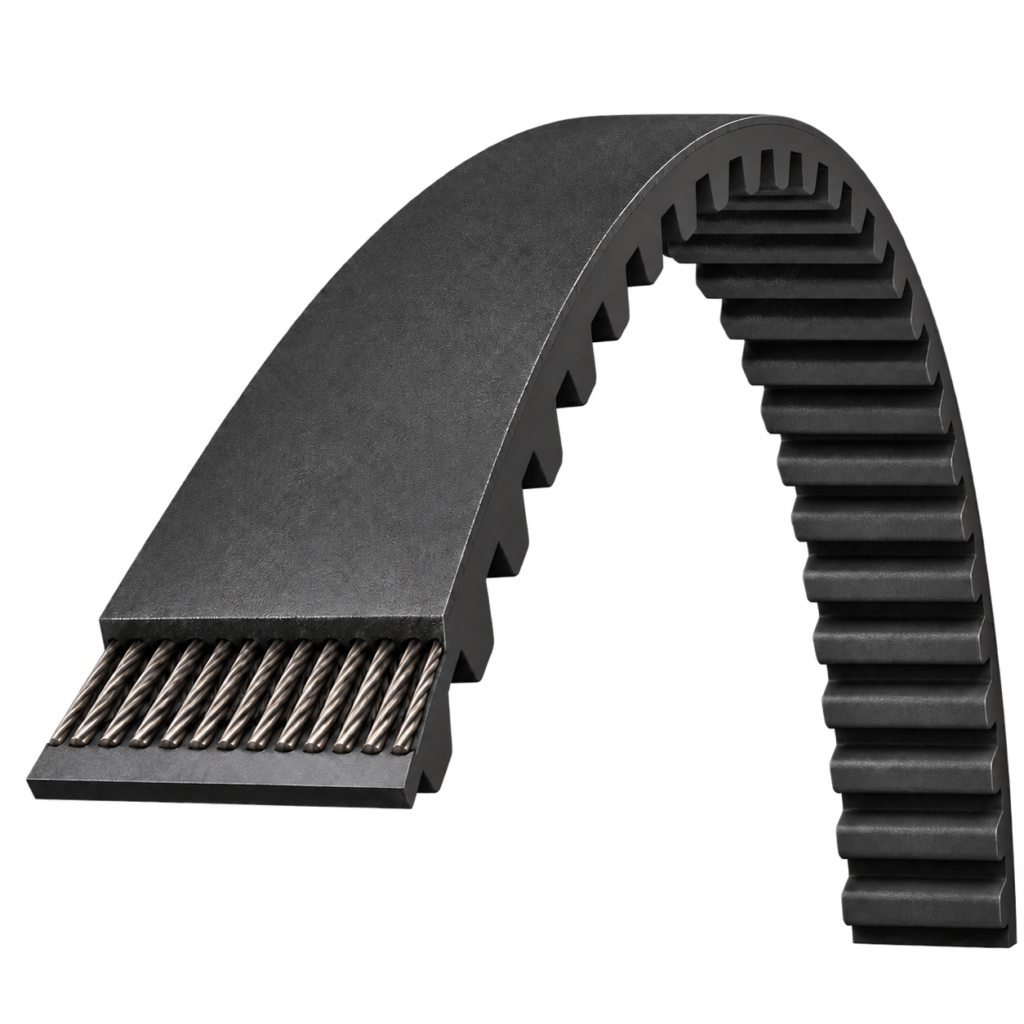
Typical Belt Configurations
Classical V belts remain the most common type used for driving fans and, along with mating sheaves, are standardized with letter designations of A, B, C, D, & E which define small to large cross sections. In addition to smooth belt designs, A, B, C, & D belts are available in a notched design, designated by an “X”. (AX, BX, CX, & DX) Notched designs can provide easier flexing, greater gripping capability, and the ability to transmit more horsepower per belt than standard configurations. These are worldwide standards; however, New York Blower does not use C, D, or E belts on fan assemblies because motor and fan shafts are unable to accommodate these wider options.
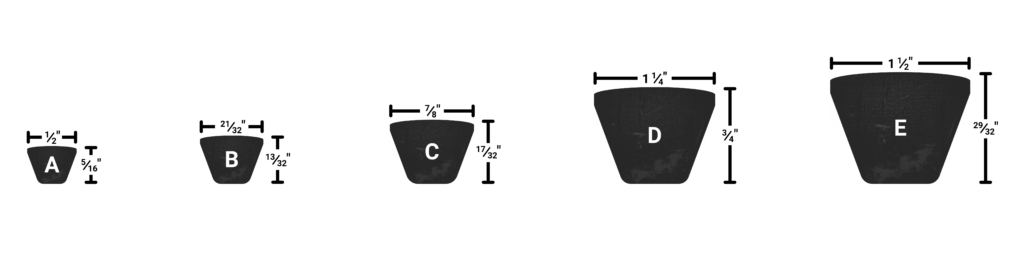
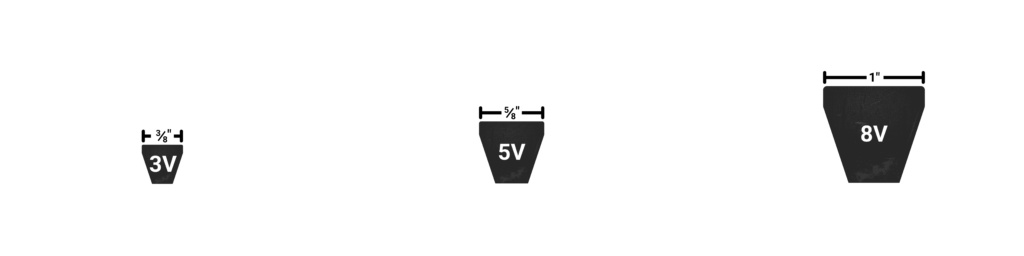
Narrow V belts are the latest step in the evolution of single-belt configurations. These belt designations are standardized as 3V, 5V, and 8V. These belts are generally capable of transmitting more horsepower per belt than Classical V belts but are more costly on a groove-for-groove basis. Narrow V belts are also available in a notched design, designated with the same “X”. (3VX, 5VX, & 8VX)
Specialized Belt Configurations
V-Ribbed belts, Joined V belts, and Synchronous (Timing) belts are not commonly used on industrial fans. However, when specifically suited for an application, Synchronous and Joined V belts can be utilized.
Why Belt Matching Matters
Proper belt matching plays an important role in multi-belt drive performance. Although industry standards establish acceptable belt lengths and tolerances, mismatched belt sets can still create problems. Through independent research, New York Blower has found that some of these industry standard allowances are too lenient for industrial fan applications. To help ensure consistent operation, all belt drive units supplied by nyb require closely matched sets that go beyond the typical tolerances. This helps provide more uniform load sharing and improved drive performance.
Why V-Belt Drives Remain a Practical Solution
V-belt drives continue to be widely used because they combine simplicity, flexibility, and reliability. They provide an economical means of transmitting power, require relatively little maintenance, and allow performance adjustments through drive ratios. By understanding factors such as creep, slip, belt selection, and belt matching, engineers and operators can help ensure these systems perform as intended.
When properly designed and maintained, V-belt drives remain an effective solution for industrial fan applications. Understanding the advantages, limitations, and design considerations behind these systems helps support reliable operation and long service life.
To learn more about drive installation, watch our latest Installation & Maintenance video!
